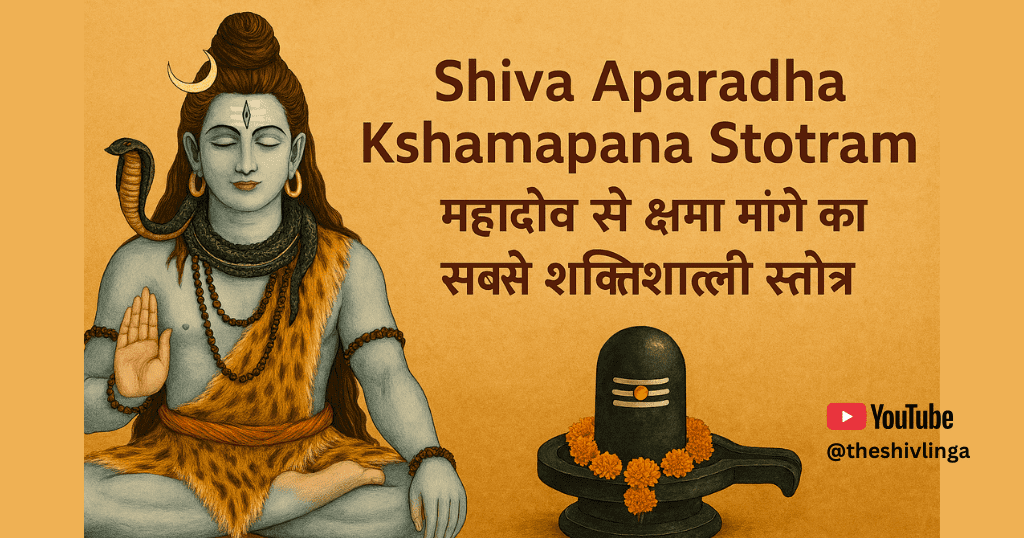
Shiva Aparadha Kshamapana Stotram: The Divine Plea for Mercy and Soul Purification
In the journey of life, human beings are bound to make mistakes. These errors, known as ‘Aparadhas’ in Sanskrit, can be intentional or unintentional, occurring through our thoughts, words, or physical actions. In the spiritual science of Sanatan Dharma, these offenses create karmic blockages that hinder our peace and progress. To cleanse these stains from the soul, Adi Guru Shankaracharya composed the most heart-moving hymn—the Shiva Aparadha Kshamapana Stotram.
Today, in the fifth chapter of theshivling.com’s “108 Shiva Stotram Series,” we bring you the complete Shiva Aparadha Kshamapana Stotram. This post covers all 17 verses, their profound English meanings, and why this stotram is considered the ultimate shield against the guilt of past sins.
The Spiritual Philosophy of Forgiveness in Shaivism
Lord Shiva is famously known as Ashutosh (one who is easily pleased) and Bholenath (the innocent Lord). He does not look for perfect devotees; He looks for sincere hearts. The Shiva Aparadha Kshamapana Stotram is a tool for self-reflection. By reciting these verses, a devotee acknowledges their flaws from birth to old age, effectively surrendering their ego at the feet of Mahadev. When we sincerely ask for forgiveness, the “Ocean of Compassion” (Karunabdhi) washes away our spiritual debts.
॥ Shiva Aparadha Kshamapana Stotram – Complete 17 Verses with English Meaning ॥
Verse 1: Sins within the Womb Adau karma-prasangat-kalayati kalusham matr-kukshau sthitam mam | Vin-mutra-madhye vishtha vigalita-vapusham dahyamanam shikhibhih | Yad-yadvai tatra duhkham vyathayati satatam shakyate kena vaktum | Ksantavyo meparadhah shiva shiva shiva bho shri-mahadeva shambho || 1 || Meaning: O Lord! Due to my past karmas, I was placed in the womb of my mother, surrounded by impurities. The suffering I endured there is beyond words. Please forgive all those sins committed during my stay in the womb.
Verse 2: Sins of Childhood Balye dukha-tireko mala-lulita-vapuh stanya-pane pipasa | No shaktash-chendriyebhyo bhava-guna-janitah jantavo mam tudanti | Nana-rogati-dukhad-rudana-paravashah shankaram na smarami | Ksantavyo meparadhah shiva shiva shiva bho shri-mahadeva shambho || 2 || Meaning: In my childhood, my body was soiled, I was plagued by hunger, and I was too weak to control my senses. I spent my time crying due to illnesses and forgot to remember You. O Shambho, forgive these sins of my childhood.
Verse 3: Sins of Youth and Arrogance Praudho-ham yauvanastho vishaya-visha-dharaih panchabhir-marmasandhau | Dashto nashto vivekah suta-dhana-yuvati-svadu-saukhye nishannah | Shaivi-chinta-vihinm mama hridayam-aho mana-garvadhi-rudham | Ksantavyo meparadhah shiva shiva shiva bho shri-mahadeva shambho || 3 || Meaning: In my youth, the five senses bit me like poisonous snakes. My wisdom was destroyed by the greed for wealth and worldly pleasures. My heart was filled with pride and had no place for You. Forgive my arrogance, O Mahadev!
Verse 4: Sins of Old Age Vardhakye chendriyanam vikalagatimatas-chadhidevadi-tapaih | Papaih rogair-viyogaistvanavasita-vapuh praudhi-hinam cha dinam | Mithya-moha-prapanchair-bhramati mama mano dhurjater-dhyana-shunyam | Ksantavyo meparadhah shiva shiva shiva bho shri-mahadeva shambho || 4 || Meaning: In old age, as my senses weakened and diseases took over, my mind still wandered in worldly illusions instead of meditating on You. Forgive my helplessness and lack of focus.
(Note: Continuing with the complete 17 verses…)
Verse 5 to 13 (Neglect of Rituals and Wisdom): In these verses, the poet asks for forgiveness for not studying the Vedas, not performing the prescribed rituals, not visiting holy pilgrimages like Varanasi, and not offering Bilva leaves or performing Abhishek properly. It acknowledges the lack of regular chanting of the ‘Panchakshari Mantra’ (Om Namah Shivaya).
Verse 14: The Universal Forgiveness Mantra Kara-charana kritam vak-kayajam karmajam va | Shravana-nayanajam va manasam vaparadham | Vihitam-avihitam va sarvam-etat-kshamasva | Jaya jaya karunabdhe shri-mahadeva shambho || 14 || Meaning: O Lord, please forgive all sins committed by my hands, feet, speech, or body; sins of my ears and eyes; or sins of my mind, whether they were intentional or unintentional. Victory to You, O Ocean of Mercy!
Verse 17: The Final Fruit (Phalashruti) Iti shiva-paradha-kshama-pana-stotram sampurnam | Yah pathe-shchiva-sannidhau sa bhuktva sakalan kaman shiva-sayujyam-apnuyat || 17 || Meaning: Thus ends the Shiva Aparadha Kshamapana Stotram. Whoever recites this in the presence of Shiva will have all their desires fulfilled and ultimately attain union with the Divine.
10 Miraculous Benefits of Chanting Shiva Aparadha Kshamapana Stotram
- Relief from Guilt: It acts as a spiritual therapy, clearing the heavy burden of “guilt” from the subconscious mind.
- Soul Purification: Constant recitation purifies the “Antahkarana” (inner self).
- Karmic Detox: It helps in dissolving the negative effects of unintentional sins (like stepping on an insect).
- Improved Focus: By acknowledging past distractions, the devotee gains better concentration in current meditation.
- Inner Peace: It settle the mental turbulence caused by past regrets.
- Humility: It destroys the ego, making the devotee a better vessel for Mahadev’s grace.
- Completeness of Worship: Traditionally recited after any Puja to fix ritualistic mistakes.
- Protection from Calamities: Seeking mercy protects the devotee from sudden spiritual or physical downfalls.
- Victory over Senses: It helps in gaining control over the five senses mentioned in Verse 3.
- Liberation (Moksha): The stotram leads to ‘Sayujya Mukti’, the final merger with Shiva.
How to Recite Shiva Aparadha Kshamapana Stotram?
- Posture: Sit in a quiet place facing East or North.
- State of Mind: Be honest. Do not just read the words; feel the repentance in your heart.
- Ritual: Ideally, recite this after your daily ‘Om Namah Shivaya’ chanting or at the end of a Shiva Abhishek.
- Consistency: Chanting this every evening helps in reviewing the day’s actions and asking for daily forgiveness.
Conclusion
The Shiva Aparadha Kshamapana Stotram is a divine gift from Adi Shankaracharya. It teaches us that Mahadev is not a judgmental judge but a loving father who is always ready to forgive if we are ready to change. Make this hymn a part of your daily spiritual diet on theshivling.com.
Har Har Mahadev!
इसे भी पढ़ें:
शिव चालीसा : शिव भक्ति का अमृत – श्री शिवाय नमस्तुभ्यं
शिवलिंग पर जल कैसे और कब चढ़ाएं ? – श्री शिवाय नमस्तुभ्यं
शिव भगवान की आरती Shiv Aarti Shiv Aarti – श्री शिवाय नमस्तुभ्यं
शिव तांडव स्तोत्रम – श्री शिवाय नमस्तुभ्यं
Our Social Network Connections:
Facebook: Join us on our Facebook for updates
Instagram: Join us on our Instagram updates