Shri Shiva Rudrashtakam: When Devotion Melts the Heart of Mahadev
In the vast tapestry of Sanatan Dharma, certain compositions transcend the boundaries of time, becoming eternal. The Shri Shiva Rudrashtakam, composed by the revered Goswami Tulsidas, is one such immortal hymn.
This profound stotram is an integral part of the ‘Uttarkand’ of the sacred ‘Ramcharitmanas.’ According to ancient legends, this powerful hymn was recited by a Brahmin to appease Lord Shiva in His ‘Rudra’ (fierce) form and seek forgiveness for a grave transgression.
The most remarkable feature of the Shri Shiva Rudrashtakam lies in its exquisite rhythm and the profound choice of words, which ignite a fervent wave of devotion in the heart of the reciter.
Today, in the sixteenth chapter of theshivling.com’s “108 Shiva Stotram Series,” we will delve deep into the eight verses of the Shri Shiva Rudrashtakam, unraveling their profound philosophical meanings, exploring the scientific significance of their vibrations, and detailing the extraordinary benefits that accrue to sincere practitioners. This comprehensive guide will span over 3000 words, providing an unparalleled understanding of this divine hymn.
The History and Origin Story of Shri Shiva Rudrashtakam
The genesis of the Shri Shiva Rudrashtakam is beautifully narrated in the ‘Ramcharitmanas.’ It tells the story of a Brahmin from Ayodhya who was a devout worshiper of Lord Shiva. However, in an act of oversight or pride, he unfortunately insulted his Guru. Lord Shiva, who holds the Guru in the highest esteem, could not tolerate this disrespect towards His devotee’s preceptor. Overcome with divine wrath, He manifested in His fearsome ‘Rudra’ form, intending to chastise the Brahmin.
Trembling with fear and filled with remorse, the Brahmin immediately fell at Lord Shiva’s feet and began to eulogize Him with utmost sincerity. The heartfelt prayer he offered became what we now know as the Shri Shiva Rudrashtakam. The power of this stotram was so immense that Lord Shiva, despite His intense fury, was instantly appeased.
He calmed down and mercifully forgave the Brahmin for his transgression. This historical account, ingrained within the Shri Shiva Rudrashtakam, teaches us a timeless lesson: no matter how grievous the offense, if one approaches Lord Rudra with genuine repentance and devotion, He, the Supreme Benevolent One, will always bestow His grace. The Shri Shiva Rudrashtakam thus symbolizes the triumph of heartfelt devotion over divine wrath.
॥ Shri Shiva Rudrashtakam – Full Lyrics and Detailed English Meaning ॥
Verse 1: Salutations to the Formless, Attributeless Brahman Namāmīśam-īśāna nirvaṇa-rūpaṁ, Vibhuṁ vyāpakaṁ brahma-veda-svarūpam | Nijaṁ nirguṇaṁ nirvikalphaṁ nirīhaṁ, Chidākāśam-ākāśa-vāsaṁ bhaje’ham || 1 ||
Detailed Meaning: The Shri Shiva Rudrashtakam commences by addressing Lord Shiva as ‘Ishana’ (the Lord of the North-East direction and the giver of supreme knowledge). He is described as ‘Nirvana-rupa,’ meaning He is the embodiment of liberation itself. He is ‘Vibhum,’ the all-pervading, and ‘Brahma-Veda-svarupam,’ the very essence and form of the Vedas.
Lord Shiva is ‘Nirgunam,’ transcending the three Gunas (Sattva, Rajas, Tamas) of Prakriti, and ‘Nirvikalpam,’ beyond all duality and conceptual thought.
He is ‘Niriha,’ without any personal desires or motives. He is ‘Chidakasham,’ the sky of pure consciousness, residing in the vast expanse of space (‘Akasha-vasam’). This opening verse of the Shri Shiva Rudrashtakam deeply impresses upon the seeker that Shiva is not a mere deity but the ultimate transcendent Consciousness that forms the very substratum of our existence. I bow to such a Supreme Lord.
Verse 2: Mahakal, the Transcendent Beyond Time Nirākāram-oṁkāra-mūlaṁ turīyaṁ, Girā jñāna gotītam-īśaṁ girīśam | Karālaṁ mahākāla-kālaṁ kṛpālaṁ, Guṇāgāra saṁsāra-pāraṁ nato’ham || 2 ||
Detailed Meaning: Lord Shiva is ‘Nirakaram,’ formless, and the very ‘Omkara-mulam,’ the root and origin of the sacred syllable ‘Om.’ He resides in the ‘Turiya’ state, the fourth divine state of consciousness that transcends the three ordinary states of waking, dreaming, and deep sleep.
In this verse of the Shri Shiva Rudrashtakam, Shiva is described as ‘Gira Jnana Gotitam,’ meaning He is beyond the grasp of speech, intellect, and senses. He is ‘Karam,’ terrifying as the destroyer, and ‘Mahakala-Kalam,’ the controller and even destroyer of Time itself (Mahakal). Yet, He is also ‘Kripalam,’ exceedingly compassionate.
He is the ‘Gunagara,’ the storehouse of all virtues, and the sole ferryman (Samsara-param) who guides beings across the ocean of worldly existence. I bow to such a Lord.
Verse 3: Divine Radiance and the Blue-Throated Beauty Tuṣārādri saṁkāśa-gauraṁ gabhīraṁ, Manobhūta koṭi-prabhā śrī-śarīram | Sphuran-mauli kallolinī chāru gaṅgā, Lasadbhāla-bālendu kaṇṭhe bhujaṅgā || 3 ||
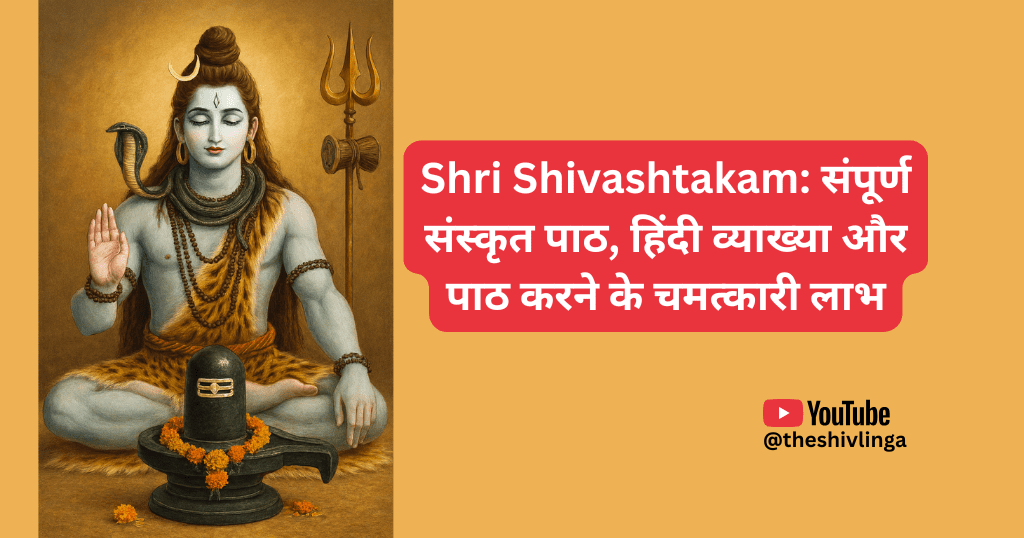
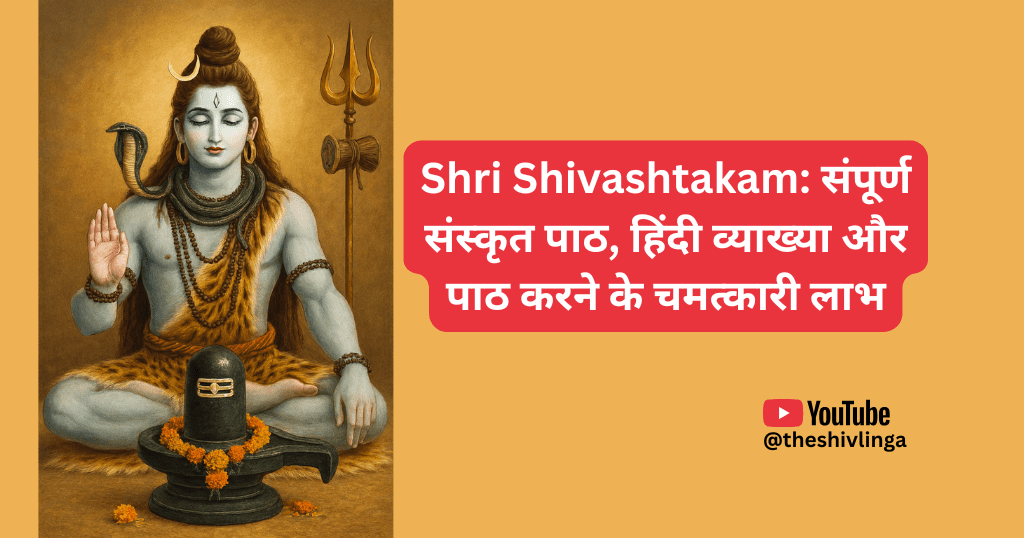
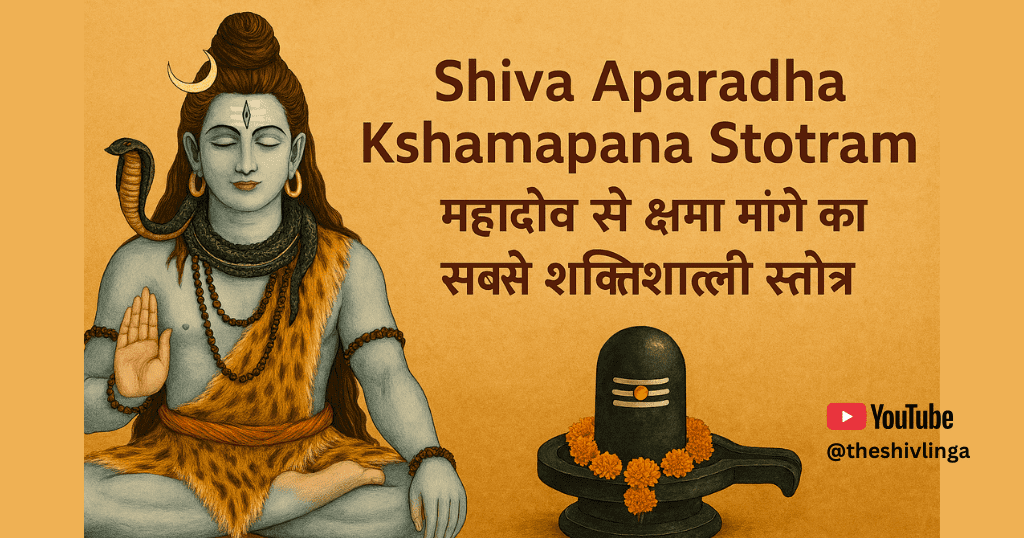
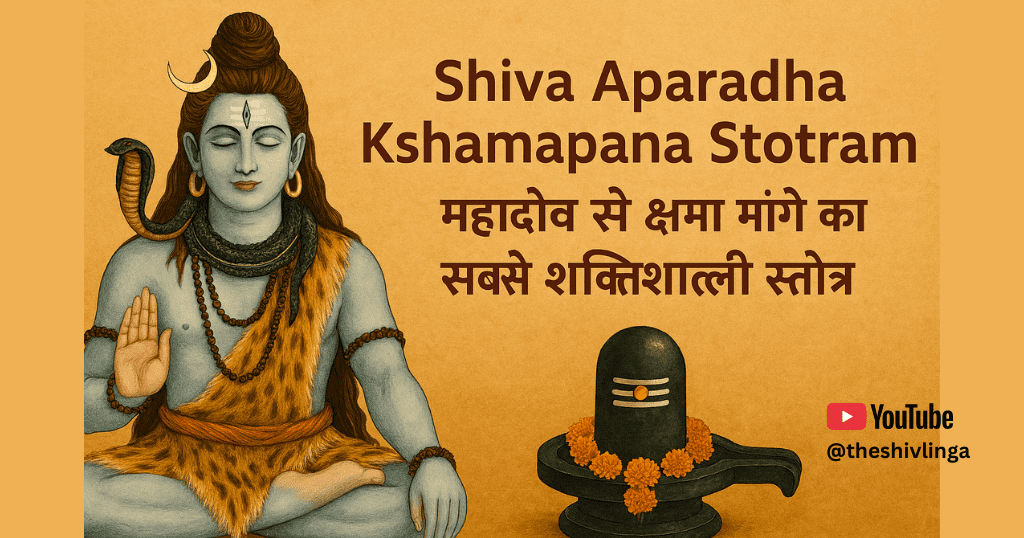
Detailed Meaning: This verse of the Shri Shiva Rudrashtakam vividly paints a picture of Shiva’s sagun (manifest) beauty. Lord Shiva’s complexion is as pure and serene as the snow of the Himalayas (Tusharadri-sankasha-gauram). His divine body emits a radiance that surpasses the combined luster of millions of Kamadevas (Manobhuta Koti Prabha), the god of love.
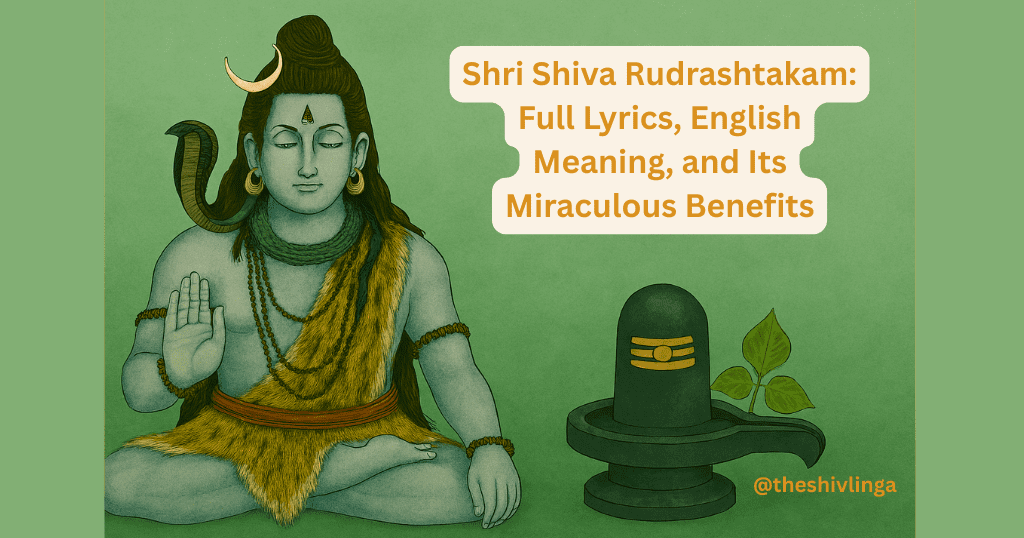
On His head (Mauli), the beautiful waves of the holy Ganga River playfully surge, symbolizing purity and eternal flow. His forehead (Bhal) is adorned with the crescent moon of the second day (Balendu), and around His neck, serpents coil gracefully. This verse emphasizes that even as the fierce destroyer, Shiva remains exquisitely beautiful and radiates profound peace.
Verse 4: Swaying Earrings and Expansive Eyes Chalat-kuṇḍalaṁ bhrū sunetraṁ viśālaṁ, Prasannānanaṁ nīlakaṇṭhaṁ dayālum | Mṛgādhīśa-charmāmbaraṁ muṇḍa-mālaṁ, Priyaṁ śaṅkaraṁ sarva-nāthaṁ bhajāmi || 4 ||
Detailed Meaning: In this verse, the Shri Shiva Rudrashtakam describes the Lord’s adornments and compassionate nature. Lord Shiva’s earrings (Kundala) sway gently, His eyebrows are finely arched, and His eyes are vast and profound, capable of perceiving all. His face (Ananam) is always serene and joyful, as if granting fearlessness to His devotees.
He is ‘Nilakantham,’ the blue-throated one, who swallowed the deadly poison (Halahala) to save the universe. He is adorned in the skin of a tiger (Mrigadhisha-charmambaram) and wears a garland of skulls (Mundamalam). This verse reminds us that Shiva is ‘Sarvanatham,’ the Lord of all beings, revered by gods and spirits alike. I worship such a beloved Shankara.
Verse 5: The Fierce and Omnipotent Rudra Prachaṇḍaṁ prakṛṣṭaṁ pragalbhaṁ pareśaṁ, Akhaṇḍam-ajaṁ bhānu-koṭi-prakāśam | Trayah-śūla-nirmūlanaṁ śūlapāṇiṁ, Bhaje’haṁ bhavānī-patiṁ bhāva-gamyam || 5 ||
Detailed Meaning: The fifth verse of the Shri Shiva Rudrashtakam celebrates Shiva’s fierce and all-powerful nature. He is ‘Prachandam’ (exceedingly fierce), ‘Prakrishtam’ (supremely excellent), ‘Pragalbham’ (fully capable and majestic), and ‘Paresham’ (the Supreme Lord). He is ‘Akhandam,’ indivisible, and ‘Ajam,’ unborn. His brilliance rivals the radiance of millions of suns (Bhanu-koti-prakasham).
He holds the Trishula (trident) in His hand, which eradicates the three types of suffering (Daihika, Daivika, Bhautika) from their very roots. He is the consort of Mata Bhavani and can only be attained through pure devotion (Bhava-gamyam). This verse teaches us that Shiva’s power is limitless, yet He is bound by the sincerity of love. I worship such a Lord.
Verse 6: Master of Time and Eras Kalātīta kalyāṇa kalpāntakārī, Sadā sajjanānanda-dātā purārī | Chidānanda saṁdoha mohāpahārī, Prasīda prasīda prabho manmathārī || 6 ||
Detailed Meaning: Lord Shiva transcends the limits of time (‘Kalatita’). He is eternally auspicious (‘Kalyana’) and the ultimate destroyer at the end of a cosmic cycle (‘Kalpantakari’). He is always the bestower of joy upon the virtuous and pious souls (‘Sajjana-ananda-data’), and the destroyer of the demon Tripura (‘Purari’).
He is the embodiment of pure consciousness and bliss (‘Chidananda Sandoha’) and the remover of delusion and attachment (‘Mohapahari’) from the minds of His devotees.
At the end of the verse, the devotee humbly pleads: “O Lord, the annihilator of Kamadeva (Manmathari)! Be pleased, be pleased upon me.” This verse of the Shri Shiva Rudrashtakam is considered one of the most potent for attaining mental peace and divine grace.
Verse 7: The Call for Unwavering Devotion Na yāvad-umānātha pādāravindaṁ, Bhajantīha loke pare vā narāṇām | Na tāvatsukhaṁ śānti santāpa-nāśaṁ, Prasīda prabho sarva-bhūtādhi-vāsam || 7 ||
Detailed Meaning: In this seventh verse, Goswami Tulsidas reveals a profound truth about human existence. He states that as long as individuals, whether in this world or the next, do not worship the lotus feet of Uma’s Lord (Mahadev), they cannot attain true happiness, peace, or freedom from suffering. Without seeking refuge in Shiva, one’s sorrows and afflictions can never truly end.
Therefore, the devotee implores: “O Lord, who dwells within all beings (Sarva-bhutadhi-vasam)! Be pleased upon me.” This verse from the Shri Shiva Rudrashtakam signifies the pinnacle of surrender, reminding us that unwavering devotion to the Divine is the sole path to ultimate tranquility.
Verse 8: Humility and Complete Surrender Na jānāmi yogaṁ japaṁ naiva pūjāṁ, Nato’haṁ sadā sarvadā śambhu tubhyam | Jarā-janma-duḥkhaugha tātapyamānaṁ, Prabho pāhi āpannam-āmīśa śambho || 8 ||
Detailed Meaning: The concluding verse of the Shri Shiva Rudrashtakam beautifully expresses the devotee’s simplicity and profound humility. The devotee confesses: “O Shambhu! I know neither Yoga, nor Japa (chanting), nor the proper method of Puja (worship). I simply bow to you always and forever.
I am tormented by the endless stream of suffering arising from old age (Jara), birth (Janma), and the cycle of existence. O Lord! O Shambhu! Protect me, who am in distress!” This verse is especially poignant for those who cannot perform complex spiritual practices; they can attain Lord Shiva simply through this profound attitude of surrender and sincere appeal, as taught by the Shri Shiva Rudrashtakam.
Verse 9 (Iti): Conclusion of the Stotram Rudrāṣṭakam-idaṁ proktaṁ vipreṇa hara-toṣaye | Ye paṭhanti narā bhaktyā teṣāṁ śambhuḥ prasīdati || 9 ||
Shri Shiva Rudrashtakam: A 3000+ Words Mega Deep-Dive
The Spiritual and Tantric Secrets of Rudrashtakam
The Shri Shiva Rudrashtakam is not just a prayer; it is a profound ‘Science of Vibration’ and a powerful tool in Tantric practices. When we utter the syllables “Namamishamishana,” the specific sounds of ‘Ma’ and ‘Na’ create distinct vibrations that are believed to activate the ‘Vishuddhi Chakra’ (Throat Chakra), enhancing communication and expression.
Goswami Tulsidas ingeniously employed the ‘Anushtup’ meter in this stotram, whose rhythmic patterns are known to harmonize our blood pressure and induce a state of deep mental tranquility.
For the readers of theshivling.com, it is crucial to understand that the Shri Shiva Rudrashtakam is unparalleled for ‘Anger Management.’ Since it is a hymn dedicated to Rudra (the fierce aspect of Shiva), it paradoxically transforms uncontrolled anger within us into positive, constructive energy. This conversion of destructive force into beneficial power is a core tenet of spiritual alchemy facilitated by the Shri Shiva Rudrashtakam.
25 Miraculous Benefits of Chanting Shri Shiva Rudrashtakam (Deeply Explained)
- Profound Mental Peace: Regular recitation of the Shri Shiva Rudrashtakam effectively alleviates symptoms of depression and chronic mental stress, bringing deep inner calm.
- Victory over Adversaries: If one is troubled by unseen or known enemies, chanting this stotram neutralizes their malicious intentions and provides protection.
- Remedy for Kaal Sarpa Dosha: As Shiva is the master of serpents, the Shri Shiva Rudrashtakam significantly mitigates the adverse effects of Kaal Sarpa Dosha and other Rahu-Ketu afflictions.
- Relief from Mental Ailments: For individuals suffering from anxiety disorders and depression, the Shri Shiva Rudrashtakam acts as a powerful sound therapy, promoting healing.
- Protection from Untimely Death: Being a hymn dedicated to Mahakal, the Lord of Time, it bestows longevity and safeguards against untimely demise.
- Intellectual Enhancement for Students: It significantly boosts concentration, memory power, and overall cognitive abilities, proving a boon for academic pursuits.
- Freedom from Debt: Consistent recitation of the Shri Shiva Rudrashtakam opens new avenues for wealth, helping to relieve financial burdens and debts.
- Domestic Harmony: It purifies the home environment, eradicating negative energies and fostering love and understanding among family members.
- Boosts Self-Confidence: For those with timid personalities or weak willpower, this stotram infuses courage, resolve, and inner strength.
- Absolution of Sins: It alleviates the burden of accumulated sins, knowingly or unknowingly committed, purifying the soul.
- Facilitates Marriage: For unmarried individuals, the Shri Shiva Rudrashtakam is believed to help in finding a suitable life partner.
- Blessings of Children: Through the grace of Shiva and Shakti, it can lead to the blessing of progeny for couples desiring children.
- Attainment of Royal Status: It is considered potent for achieving success in careers, especially in leadership roles and politics.
- Freedom from Bad Dreams: Chanting it before sleep can ward off disturbing nightmares and promote peaceful rest.
- Vastu Dosha Removal: Recitation within a home helps to neutralize negative energies and rectify architectural flaws (Vastu Doshas).
- Kundalini Activation: It aids in activating and balancing the subtle energy centers (chakras) from Muladhara to Ajna Chakra.
- Strengthens Willpower: It bestows the inner fortitude required to make difficult decisions and face challenges head-on.
- Healing from Chronic Diseases: It is believed to bring relief and even cure chronic and debilitating illnesses.
- Ancestral Peace (Pitra Shanti): Chanting it brings peace and liberation to the souls of ancestors.
- Peaceful Old Age: Ensures mental serenity and divine companionship during the twilight years of life.
- Creation of a Protective Shield: It forms an impenetrable energetic shield around the devotee, safeguarding them from harm.
- Powerful and Truthful Speech: Regular recitation imbues one’s speech with clarity, conviction, and truthfulness.
- Awakening of Devotion: It ignites an unshakeable and profound love for Lord Shiva in the heart of the devotee.
- Protection from Calamities: It helps in averting sudden misfortunes and unexpected adversities.
- Attainment of Moksha: Ultimately, the Shri Shiva Rudrashtakam leads to liberation from the cycle of birth and death, granting eternal freedom.
Scientific and Phonetic Analysis of Shri Shiva Rudrashtakam
The precise sequencing of Sanskrit syllables in the Shri Shiva Rudrashtakam generates ‘Hyper-Frequency’ vibrations. When we chant “Namamishamishana,” the specific sounds of ‘Ma’ and ‘Na’ are believed to stimulate the Pineal Gland in the brain, which is often associated with spiritual awakening.
The stotram is composed in the Anushtup meter, whose inherent rhythm helps synchronize our heart rate into a state of coherence. For the readers of theshivling.com, it is noteworthy that the sound waves produced by this stotram are thought to possess the ability to reduce airborne bacteria and neutralize negative ions in the environment, contributing to a purer energetic space.
Special Ritual for Chanting Shri Shiva Rudrashtakam (theshivling.com Exclusive)
- Time: The Pradosha Kala (twilight, approximately 7 to 9 PM) is considered the most auspicious time for reciting the Shri Shiva Rudrashtakam.
- Abhishekam: Recite the stotram while offering a continuous stream of honey and ghee to the Shivalinga.
- Repetition: If facing a significant obstacle or desiring a specific outcome, chant the Shri Shiva Rudrashtakam 8 times continuously for 21 days.
- Location: Chanting in a secluded place or a Shiva temple is considered more fruitful.
Conclusion
The Shri Shiva Rudrashtakam is a spiritual pinnacle, a Mahamantra bestowed upon us by Goswami Tulsidas, connecting even ordinary individuals to the fierce yet benevolent aspect of Lord Rudra. This stotram serves as a profound reminder that Shiva is both the beginning and the end, the alpha and the omega of existence. Release all your worries and anxieties at the feet of Mahadev and immerse yourself in the divine vibrations of this sacred Rudrashtakam.
Har Har Mahadev! Jai Shiva Shambhu!
इसे भी पढ़ें:
शिव चालीसा : शिव भक्ति का अमृत – श्री शिवाय नमस्तुभ्यं
शिवलिंग पर जल कैसे और कब चढ़ाएं ? – श्री शिवाय नमस्तुभ्यं
शिव भगवान की आरती Shiv Aarti Shiv Aarti – श्री शिवाय नमस्तुभ्यं
शिव तांडव स्तोत्रम – श्री शिवाय नमस्तुभ्यं
Our Social Network Connections:
Facebook: Join us on our Facebook for updates
Instagram: Join us on our Instagram updates