Shri Shivashtakam: The Eight Mystical Verses of Divine Union
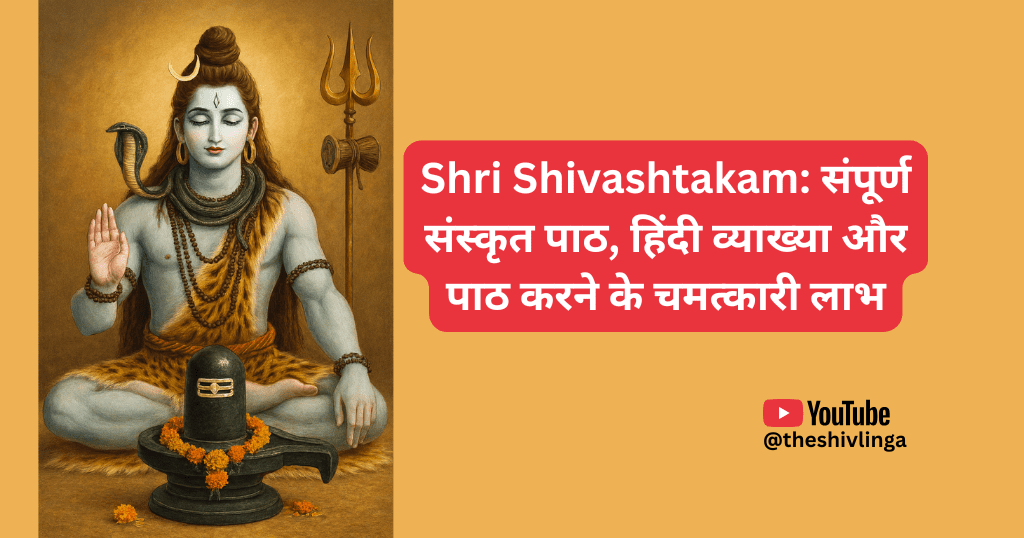
The universe is a dance of energy, and at the heart of this cosmic dance sits Mahadev, the primordial source. To capture the vastness of Lord Shiva into human language is impossible, yet Adi Guru Shankaracharya achieved a spiritual miracle through the composition of “Shri Shivashtakam.” ‘Ashtakam’ refers to a poem consisting of eight verses. This particular hymn is celebrated across the globe not just for its poetic beauty, but for its vibrational power to transform a devotee’s consciousness. In the sixth chapter of theshivling.com’s “108 Shiva Stotram Series,” we delve into the profound depths of Shri Shivashtakam, providing the full lyrics, a stanza-by-stanza philosophical breakdown, and the scientific benefits of its recitation.
The Metaphysical Science of Shri Shivashtakam
Before we dive into the verses, it is essential to understand why this hymn is so powerful. Each of the eight verses corresponds to the eight elements of nature (Ashta-Murti): Earth, Water, Fire, Air, Space, Sun, Moon, and the Soul (Atman). By reciting Shivashtakam, you are essentially harmonizing your internal biology with the external cosmos.
Shri Shivashtakam – Complete Lyrics and English Commentary: Meaning of Shivashtakam
Verse 1: The Master of Life and the Universe Prabhum prananatham vibhum vishvanatham jagannathanatham sadanandabhajam | Bhavadbhavya-bhuteshvaram bhutanatham shivam shankaram shambhum-ishanam-ide || 1 || Deep Meaning: This verse addresses Shiva as ‘Prana-Natham’ (The Lord of our breath). In Yogic science, breath is the bridge between the body and the soul. When we call Shiva the Lord of Breath, we acknowledge that every inhalation and exhalation is a gift from Him. He is the master of the past, present, and future.
Verse 2: The Symbols of Vairagya (Detachment) Gale nilakantham shashankavatansam bhujangabharanam chitabhasmaliptam | Kapalam trishulam varenyam varenyam shivam shankaram shambhum-ishanam-ide || 2 || Deep Meaning: Here, the ‘Nilakantha’ (blue throat) represents the ability to transform poison (negativity) into grace. The ‘Chita-Bhasma’ (funeral ash) is a stark reminder of ‘Memento Mori’—the inevitability of death—which encourages the devotee to live a life of detachment and higher purpose.
Verse 3: The Convergence of Force and Peace Jatajutabhasvatsamudbhasitodam sphurach-chaktipatotthakandaprachandam | Jagad-vyapakam vishvarupam virupam shivam shankaram shambhum-ishanam-ide || 3 || Deep Meaning: This verse highlights the paradox of Shiva. He is ‘Virupam’ (formless) yet ‘Vishvarupam’ (all-formed). The Ganges flowing from His matted hair signifies the eternal flow of wisdom that cools the ‘Prachanda’ (fierce) heat of worldly suffering.
Verse 4: The Transcendental Reality Ajam shashvatam karanam karananam shivam kevalam bhasakam bhasakanam | Turiyam tamah-param-adyantahinam shivam shankaram shambhum-ishanam-ide || 4 || Deep Meaning: Shiva is called ‘Karanam Karananam’—the cause of all causes. In modern physics, this refers to the ‘Singularity’ or the source of the Big Bang. He is ‘Turiyam,’ the fourth state of consciousness beyond waking, dreaming, and deep sleep.
Verse 5: Salutation to the Formless Bliss Namaste namaste vibho vishvamurte namaste namaste chidanandamurte | Namaste namaste tapoyogagamya namaste namaste shrutijnanagamya || 5 ||
Verse 6: The Conqueror of Desires Prasida prasida prabho manmathare prasida prasida prabho lokanatha |… Deep Meaning: ‘Manmathare’ refers to the destroyer of Kamadeva (Desire). This verse is a prayer to conquer our own lust and addictive patterns, asking Shiva to fill our hearts with ‘Prasada’ (Divine Grace).
Verse 7: Beyond Labels and Duality Na yamyo na gamyo na desho na vesho na chopadhibhedo na chopadhihinah |…
Verse 8: Pashupatinath – The Protector of Beings Pashunam patim papanasham paresham gajendrasya krittim vasanam varenyam | Jatajutamadhye sphurad-gangavari shivam shankaram shambhum-ishanam-ide || 8 ||
Benefits of Shivashtakam
10 Miraculous Benefits: Why This Shri Shivashtakam Stotram is a Spiritual Treasure
- Karmic Cleansing: Reciting these 8 verses acts as a “spiritual soap,” washing away the ‘Vasanas’ (tendencies) that lead to sinful actions.
- Psychological Balance: For those suffering from anxiety or bipolar emotions, the rhythm of Shri Shivashtakam provides a grounding effect.
- Intellectual Sharpness: Chanting in Sanskrit stimulates the hippocampus, improving memory and cognitive functions.
- Aura Strengthening: It creates a protective ‘Kavach’ (shield) around the practitioner, repelling negative vibrations.
- Overcoming Fear of Death: By meditating on the ‘Bhasma-clad’ Shiva, one realizes the eternal nature of the soul.
- Success in Yoga: It is the perfect preparatory chant for those entering deep meditation or Pranayama.
- Financial Stability: Worshipping Shiva as ‘Vishvanatha’ removes the obstacles in one’s ‘Karma-Bhoomi’ (workplace).
- Harmonious Relationships: Since Shiva is ‘Shambhu’ (source of peace), it settles disputes within the family.
- Vak-Siddhi: Regular and correct pronunciation leads to ‘Vak-Siddhi’—the power of effective and truthful speech.
- Sayujya Mukti: The ultimate benefit is ‘Sayujya’—becoming one with Shiva’s consciousness at the time of death.
Meditative Guide: How to Recite Shri Shivashtakam for Results
- The Alpha State: Try to recite it in the ‘Brahma Muhurta’ (approx. 4:00 AM to 6:00 AM). The atmosphere is quiet, and the mind is naturally in an alpha state, making the stotram more effective.
- The Visualization: While chanting Verse 2, visualize the blue throat of Shiva absorbing all your worries and stress.
- The Sound: If possible, chant aloud. The Sanskrit phonemes are designed to vibrate the roof of the mouth, which stimulates the hypothalamus and pituitary glands.
- The Offering: Place a small vessel of water near you while chanting. After the recitation, drink the water; it is now ‘charged’ with the vibrations of the stotram.
FAQ – Frequently Asked Questions
- Can beginners recite Shivashtakam?
- Yes, it is one of the most accessible Shiva hymns. Even if you cannot pronounce every word perfectly at first, your ‘Bhava’ (intent) is what Mahadev values.
- Is it necessary to be a vegetarian to chant this?
- While a ‘Sattvic’ diet helps in higher meditation, Shiva is the Lord of all (Pashupati). He accepts everyone. However, purity of mind is more important than purity of plate.
- How many times should I chant?
- Chanting it once is good, but repeating it 3, 7, or 11 times establishes a deeper neurological pattern.
Conclusion
Shri Shivashtakam is not just a prayer; it is a portal. Through these eight verses, Adi Shankaracharya handed us a key to the kingdom of inner peace. Whether you seek material success or spiritual liberation, the path of the Shivashtakam leads to the same destination—the feet of Mahadev. We invite you to continue this journey of 108 stotrams with us on theshivling.com.
Har Har Mahadev!
इसे भी पढ़ें:
शिव चालीसा : शिव भक्ति का अमृत – श्री शिवाय नमस्तुभ्यं
शिवलिंग पर जल कैसे और कब चढ़ाएं ? – श्री शिवाय नमस्तुभ्यं
शिव भगवान की आरती Shiv Aarti Shiv Aarti – श्री शिवाय नमस्तुभ्यं
शिव तांडव स्तोत्रम – श्री शिवाय नमस्तुभ्यं
Our Social Network Connections:
Facebook: Join us on our Facebook for updates
Instagram: Join us on our Instagram updates